
How Content Marketing in Digital Marketing Drives Massive Growth in 2026
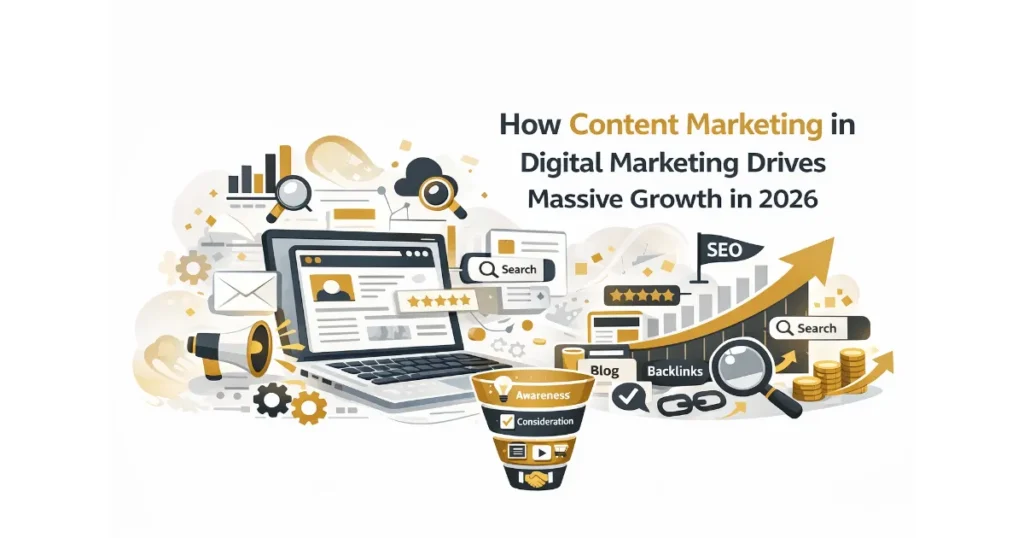
In 2026, businesses no longer compete only on products or pricing; they compete on attention, trust, and value. The digital ecosystem has become more crowded than ever, and customers have become smarter, more selective, and more research-driven. In this environment, Content Marketing In Digital Marketing has emerged as the backbone of every successful brand strategy. Companies that consistently educate, inform, and inspire their audience are outperforming those that rely only on paid ads or promotional tactics.
The shift toward value-driven communication has made content the foundation of visibility, engagement, and conversions. The importance of content marketing in digital marketing is not just about publishing blogs or social media posts; it is about creating a strategic ecosystem where every piece of content supports brand authority, search engine optimization, lead generation, and customer retention. In 2026, content marketing is not an option. It is the core engine that powers the entire digital marketing strategy.
The Evolution of Digital Marketing and the Rise of Content
Digital marketing has evolved dramatically over the last decade. Earlier, brands focused heavily on paid advertisements, keyword stuffing, and aggressive promotional campaigns. However, search engines have become more intelligent, and social media platforms now prioritize meaningful engagement over superficial reach. As algorithms evolved, so did user expectations.
Modern customers expect brands to solve problems before asking for a sale. They want answers, guidance, and authenticity. This shift has positioned content marketing in digital marketing as the primary tool for building relationships. Instead of interrupting users with ads, brands now attract users through informative blogs, engaging videos, educational email campaigns, and valuable social media content.
The importance of content marketing in digital marketing lies in its ability to align with how people naturally consume information. Customers search for solutions, compare options, read reviews, and watch tutorials before making decisions. Brands that provide high-quality content at each stage of this journey win trust and conversions.
Content Marketing Drives Organic Visibility Through SEO
Search engine optimization remains a powerful driver of online growth in 2026. However, SEO without strong content has no real impact. Search engines prioritize websites that provide value, depth, and relevance. This is where content marketing in digital marketing becomes essential.
High-quality blog posts, pillar pages, case studies, and long-form guides help websites rank for competitive keywords. When businesses strategically include focus keywords like content marketing in digital marketing and related LSI terms, such as the importance of content marketing in digital marketing, they increase their chances of ranking for relevant search queries.
Content also improves internal linking structures. When you publish consistent blog content, you can link related articles, service pages, and landing pages naturally. This strengthens website architecture and improves crawlability. Additionally, authoritative content encourages external backlinks, which further boost domain authority.
SEO in 2026 is content-driven. Without relevant, optimized, and user-focused content, digital marketing strategies fail to achieve sustainable organic growth.
Building Trust and Authority in a Competitive Market
Trust has become the currency of digital success. Consumers are exposed to countless brands every day, and they choose businesses that demonstrate expertise and authenticity. The importance of content marketing in digital marketing is clearly visible in how it builds authority.
When a brand consistently publishes insightful blogs, industry reports, and educational resources, it positions itself as a thought leader. For example, a marketing agency that shares detailed guides on SEO strategy, conversion rate optimization, and social media marketing establishes credibility among potential clients.
Content marketing builds long-term brand equity. Instead of pushing sales messages, it nurtures relationships. This approach increases brand recall, strengthens reputation, and enhances online credibility. Over time, audiences begin to trust the brand’s voice, making them more likely to convert and recommend the business to others.
Supporting Every Stage of the Customer Journey
A strong digital marketing strategy addresses awareness, consideration, and decision stages. Content marketing in digital marketing plays a central role in each of these phases.
At the awareness stage, blog posts, educational videos, and social media content introduce audiences to problems and solutions. During the consideration stage, in-depth guides, webinars, and case studies provide detailed insights. Finally, at the decision stage, testimonials, comparison pages, and product demonstrations influence purchasing decisions.
The importance of content marketing in digital marketing lies in its flexibility. It adapts to user intent and delivers the right message at the right time. Instead of relying solely on paid campaigns, brands can create evergreen content that continues to attract leads for months or even years.
Enhancing Social Media and Community Engagement
Social media marketing in 2026 depends heavily on meaningful content. Platforms reward posts that generate discussions, shares, and saves. Without strong content, social media strategies lose impact.
Content marketing fuels social campaigns by providing valuable material for posts, reels, infographics, and live sessions. Brands that integrate content marketing in digital marketing strategies across platforms create consistent messaging and stronger engagement.
The importance of content marketing in digital marketing is especially evident in community building. Engaging content encourages followers to interact, comment, and share experiences. This organic engagement increases reach and strengthens brand loyalty.
Personalization and AI-Driven Content Strategies
Artificial intelligence and data analytics have transformed digital marketing in 2026. Businesses now analyze user behavior, search intent, and engagement patterns to create personalized content experiences.
Content marketing integrates seamlessly with AI tools. Brands can segment audiences and deliver customized blog recommendations, email sequences, and product suggestions. This personalized approach increases engagement rates and improves conversion metrics.
The importance of content marketing in digital marketing grows even stronger when combined with automation. While AI helps distribute and optimize content, human creativity ensures authenticity and emotional connection. Together, they create a powerful marketing ecosystem.
Driving Lead Generation and Conversations
Lead generation strategies in 2026 depend on value exchange. Users are more likely to share contact information when they receive meaningful resources in return.
Ebooks, whitepapers, checklists, and webinars are all products of content marketing in digital marketing. These assets help businesses capture qualified leads while providing genuine value. When supported by email marketing automation and remarketing strategies, content becomes a conversion engine.
The importance of content marketing in digital marketing lies in its ability to warm up leads before direct sales communication. Instead of cold outreach, brands nurture prospects with informative content, increasing trust and improving closing rates.
Long-Term Cost Efficiency and ROI
Paid advertising delivers quick visibility but requires continuous investment. Content marketing, on the other hand, offers long-term returns. A well-optimized blog post can generate traffic for years without additional cost.
When businesses invest in content marketing and digital marketing, they build digital assets that appreciate over time. Evergreen content continues attracting organic traffic, generating leads, and supporting sales funnels.
The importance of content marketing in digital marketing is also evident in its measurable ROI. Analytics tools track engagement, traffic sources, keyword rankings, and conversion rates. This data-driven approach allows businesses to refine strategies and maximize performance.
Strengthening Brand Storytelling and Emotional Connection
Modern consumers connect with stories more than advertisements. Storytelling humanizes brands and builds emotional relationships. Content marketing provides the perfect platform for sharing brand journeys, success stories, and customer experiences.
Through blogs, videos, and social media narratives, businesses can communicate their mission and values. Content marketing in digital marketing allows brands to express personality and differentiate themselves from competitors.
The importance of content marketing in digital marketing becomes clear when customers feel emotionally connected to a brand. Emotional loyalty often leads to repeat purchases and strong word-of-mouth referrals.
Integration with Other Digital Marketing Channels
Content does not operate in isolation. It supports email marketing, pay-per-click campaigns, influencer marketing, and online reputation management.
For example, paid ads perform better when they direct users to valuable landing pages with informative content. Email marketing campaigns become more effective when they include educational resources. SEO campaigns succeed when supported by consistent blogging.
This interconnected ecosystem proves that content marketing in digital marketing acts as the central pillar that supports all other channels. The importance of content marketing in digital marketing lies in its ability to unify messaging and ensure strategic alignment across platforms.
Conclusion
In 2026, digital marketing success depends on trust, visibility, engagement, and value. Content marketing delivers all these elements in a structured and sustainable way. From improving SEO rankings to building authority, from driving social media engagement to nurturing leads, content remains the foundation of modern strategies.
The importance of content marketing in digital marketing cannot be overstated. It transforms brands from advertisers into educators and from sellers into trusted advisors. Businesses that prioritize high-quality, optimized, and user-focused content gain long-term competitive advantages.
As digital platforms continue to evolve, one principle remains constant: value-driven communication wins. Content marketing in digital marketing is not just a tactic; it is the strategic core that drives growth, builds relationships, and ensures sustainable success in 2026 and beyond..